
LPG Contractor Dubai: Professional LPG Installation & Pipeline Services
Choosing the right LPG contractor in Dubai is an important decision for any project that depends on a safe and reliable gas supply. Whether the requirement is for a residential development, commercial kitchen, hotel, restaurant, or industrial facility, an LPG system needs more than basic pipe installation. It requires proper engineering, suitable equipment, accurate installation, testing, commissioning, and ongoing maintenance.
A well-designed LPG system helps provide consistent gas distribution while making the installation easier to operate, inspect, and maintain over its service life.
Gulf Gas provides LPG and SNG system design, engineering, installation, testing, commissioning, and maintenance services for residential and commercial requirements across the UAE. The company was founded in 1998 and has developed its capabilities around gas and pipeline systems.
What Does an LPG Contractor Do?
An LPG contractor is responsible for much more than installing gas pipelines. A professional contractor can support different stages of a project, from understanding the site’s requirements and developing the gas system design to installing equipment, testing the completed system, and providing maintenance support.
Depending on the project, an LPG installation may involve:
- LPG storage and supply arrangements
- Gas pipeline design and routing
- Pipeline sizing and pressure requirements
- Regulators and valves
- Gas manifolds and control equipment
- Gas detection systems
- Emergency shut-off arrangements
- Appliance or equipment connections
- Pressure testing
- System commissioning
- Preventive maintenance and repairs
The exact configuration depends on the building, expected gas consumption, equipment connected to the system, site conditions, and applicable project requirements.
For this reason, selecting an LPG contractor in Dubai should be based on engineering capability and project experience, not simply installation cost.
Why Professional LPG Installation Matters
An LPG system must work as one complete network. Storage, pressure regulation, pipelines, valves, safety equipment, and points of use all need to be considered together.
Poor planning can create problems later in the project. For example, incorrect pipeline sizing, unsuitable routing, inadequate access to equipment, or poorly planned pressure regulation can affect system performance and make future maintenance more difficult.
Professional LPG installation starts with understanding the actual requirements of the facility. Engineers can assess the building layout, gas demand, equipment requirements, pipeline routes, and other project conditions before developing the system.
This approach helps ensure that the installation is designed around the project rather than forcing the project to fit a standard system.
LPG System Design and Engineering
Good installation begins with good engineering.
Before construction starts, the gas system should be planned according to the requirements of the property and the equipment that will use the gas. This can include assessing expected gas demand, determining pipeline routes, selecting suitable components, and planning pressure regulation and safety equipment.
Gulf Gas provides gas design and engineering services for LPG, SNG, natural gas, medical gas, and industrial gas applications. Its engineering work covers different environments, including restaurants, kitchens, hotels, industrial facilities, cafeterias, universities, ovens, and burners.
A properly engineered LPG system can also make future inspection and maintenance easier. Where future expansion is expected, these requirements can be considered during the planning stage rather than requiring major changes later.
For more information, see our Design & Engineering services.
What Is Included in an LPG Installation Project?
Every project is different, but a professional LPG installation may involve several important stages.
1. Site Assessment
The project begins with an understanding of the site.
Engineers may review the building layout, intended gas applications, equipment locations, available space, existing infrastructure, and expected gas demand. For an existing system, the condition of the current installation may also need to be assessed.
A detailed site assessment provides the information required to develop a practical system design.
2. LPG System Design
The design stage converts the project requirements into an engineered gas distribution system.
Depending on the application, the design may consider:
- Pipeline routes
- Pipe sizes
- Pressure levels
- Regulator locations
- Valve locations
- Equipment connections
- Gas detection requirements
- Emergency shut-off arrangements
- Storage and supply requirements
The objective is to create a system that can deliver gas to the required points while supporting safe and reliable operation.
3. Material and Equipment Selection
The components used in an LPG system should be appropriate for the application, pressure, environment, and project specifications.
This can include pipes, valves, regulators, manifolds, gas detectors, solenoid valves, control panels, fittings, and other associated equipment.
Selecting appropriate components at the beginning can help support the reliability and maintainability of the completed system.
4. LPG Pipeline Installation
Once the design and project requirements have been established, the pipeline and associated equipment can be installed.
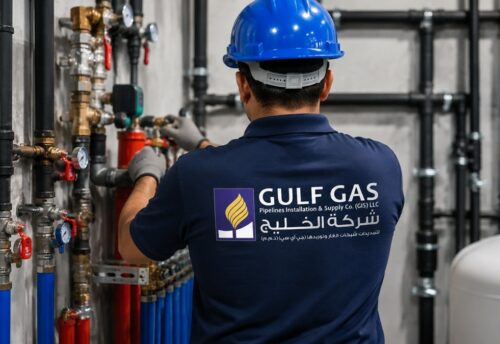
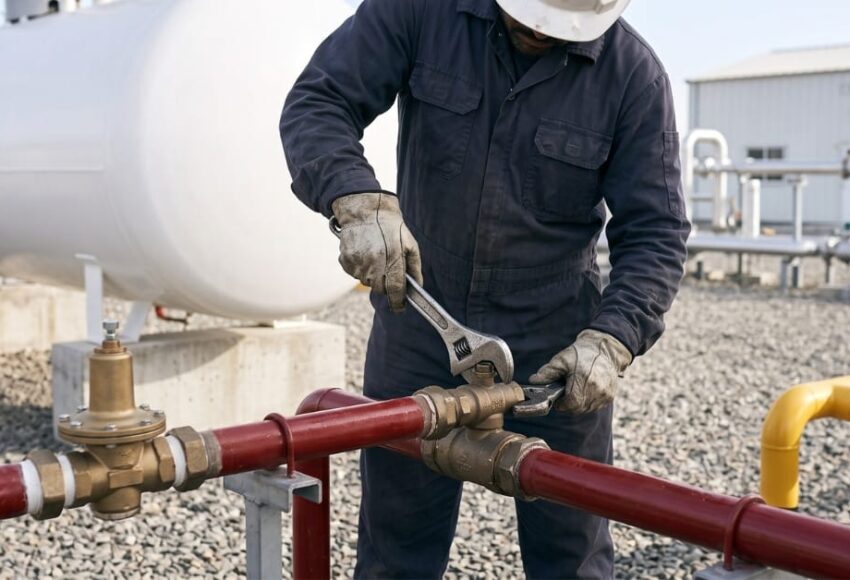
Installation may include pipeline routing and support, valve and regulator installation, connection of gas equipment, installation of safety devices, and integration with the overall gas system.
Gulf Gas installation services include gas control panels, gas detectors, gas manifolds, solenoid valves, pressure testing, and central gas system installations.
5. Testing and Commissioning
Testing is an essential part of an LPG installation.
Before the system is placed into normal operation, the completed installation should be checked and tested according to the project requirements. Testing helps identify issues such as leakage, pressure problems, defective connections, or installation deficiencies.
Following successful testing and any required approvals, the system can be commissioned for operation.
6. Maintenance and Ongoing Support
Installation is not the end of the project.
Gas systems contain components that require periodic inspection and maintenance. Regulators, valves, pipelines, detection systems, and other equipment can require attention over time depending on operating conditions and the system’s configuration.
Planned maintenance helps identify potential issues before they become major operational problems and can support the long-term performance of the installation.
Gulf Gas provides maintenance and emergency services tailored to customer requirements, including support for gas systems that may not have originally been installed by Gulf Gas.
LPG Installation for Residential Projects
Residential LPG systems can be used in apartment buildings, villa communities, residential compounds, and other developments that require centralized gas distribution.
A centralized LPG system can distribute gas from a designated storage area through a pipeline network to individual residences or points of use. Such systems require careful planning of storage, pressure regulation, pipeline routing, and safety equipment.
For residential developments, engineers may need to consider the number of units, expected demand, kitchen layouts, available utility areas, and future requirements.
Gulf Gas provides residential gas pipeline solutions covering centralized LPG storage, pressure regulation, residential gas piping, installation, testing, commissioning, and maintenance.
LPG Installation for Commercial Buildings
Commercial properties can have very different gas requirements depending on how the facility operates.
Hotels, restaurants, cafés, catering facilities, food courts, educational institutions, and other commercial buildings may use LPG for cooking and other equipment.
A commercial LPG system therefore needs to be designed around the actual equipment and expected operating demand. Pipeline routing, pressure requirements, gas control equipment, detection systems, and access for maintenance all need to be considered during the project.
Gulf Gas’s installation capabilities cover commercial applications including hotels and resorts, mall food courts and catering services, restaurants and cafés, and educational institutions.
LPG Installation for Industrial Facilities
Industrial facilities can require larger and more specialized gas systems.
Depending on the application, LPG may be used for equipment such as burners, boilers, generators, turbines, welding machines, or other industrial machinery.
Industrial installations can involve higher gas demand and more complex operating requirements. Pipeline capacity, pressure regulation, equipment connections, safety systems, and maintenance access should therefore be considered during the engineering stage.
Gulf Gas supports industrial gas installation requirements and lists applications including turbines, burners, power generators, boilers, welding machines, and molding machines.
Safety Considerations in LPG Installation
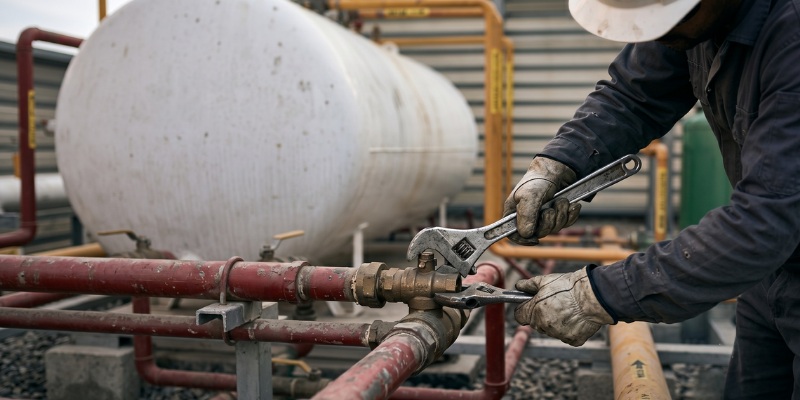
Safety needs to be considered throughout the entire lifecycle of an LPG system—not only during installation.
Important areas can include:
- Appropriate system design
- Correct pipeline sizing and routing
- Suitable valves and regulators
- Gas leak detection
- Emergency shut-off systems
- Pressure testing
- Proper installation practices
- Routine inspection and maintenance
- Access to critical equipment
The exact safety requirements depend on the project and applicable UAE requirements. A professional LPG contractor should assess the site and system rather than applying the same configuration to every project.
Gulf Gas identifies safety, integrity, innovation, and quality among its core values and maintains ISO 45001, ISO 9001, and ISO 14001 certifications listed on its company website.
LPG Pipeline Installation for New and Existing Systems
LPG contractors are not only needed for new construction projects.
Existing gas systems may require inspection, modification, repair, refurbishment, maintenance, or additional connections when a building’s requirements change.
For example, a commercial kitchen may be upgraded with additional equipment, a residential development may require system modifications, or an existing pipeline may need repair or maintenance.
Gulf Gas states that its engineering and maintenance capabilities include work on existing gas installations as well as new-build projects.
Before modifying an existing LPG system, the installation should be properly assessed so that any changes are compatible with the existing design and operating requirements.
How to Choose an LPG Contractor in Dubai
Choosing an LPG contractor should involve more than comparing quotations.
Project owners, developers, MEP contractors, facility managers, and other decision-makers can consider the following:
Engineering Capability
The contractor should be able to assess the project and develop a gas system around its actual requirements.
Installation Experience
Look for experience with the type of project being developed, whether residential, commercial, or industrial.
Testing and Commissioning
The contractor should have a clear process for testing the completed system before it becomes operational.
Maintenance Support
Long-term maintenance is an important part of gas system management. A contractor that can provide ongoing support can simplify future inspections, repairs, and maintenance.
Project Experience
A contractor’s previous project experience can provide useful insight into its ability to handle different site conditions and system requirements.
Gulf Gas works with residential, commercial, and industrial applications and lists MEP/main contractors and developers among its client categories.
Why Gulf Gas for LPG Installation in Dubai and the UAE?
Gulf Gas has been operating since 1998 and provides engineering, installation, maintenance, and emergency services for gas and pipeline systems.
Its LPG/SNG capabilities cover the project lifecycle from design through installation and maintenance. The company also supports different gas applications and project types across the UAE.
For clients, this integrated approach means the gas system can be considered as a complete project rather than as separate engineering, installation, and maintenance activities.
Gulf Gas currently lists more than 25 years of experience, 500+ clients, 800+ projects delivered, and more than 100 pipeline experts on its company profile.
A Complete Approach to LPG System Installation
A successful LPG installation starts well before the first pipe is installed.
The project should begin with a clear understanding of the site’s requirements, followed by appropriate engineering, equipment selection, installation, testing, commissioning, and maintenance.
Whether the project is a residential development, hotel, restaurant, commercial property, or industrial facility, the gas system should be designed around its actual operating requirements.
Working with an experienced LPG contractor in Dubai can help project owners and contractors coordinate these different stages through a structured engineering and installation process.
Contact Gulf Gas for LPG Installation Services
Planning an LPG system for a residential, commercial, or industrial project?
Gulf Gas provides LPG system design, engineering, installation, testing, commissioning, maintenance, and emergency support across the UAE.
Share your project requirements with our team to discuss the appropriate gas system for your facility.
Gulf Gas Co. (GIS) LLC
Dubai, UAE
Phone: +971 4 251 7979
Email: [email protected]