
- March 12, 2026
- Gulf Gas
- 0 Comments
- 2721 Views
- 183 Likes
- Fire Safety Systems
Fire Safety Systems in Buildings: A Complete Guide to Fire Alarms and Emergency Lighting
Residential, commercial and industrial buildings have one of the most severe risks in fire hazards. Electrical faults, gas leakages, and overheating gadgets may generate hazardous fire conditions within a short time threatening property and even lives.
Modern constructions use fire safety systems in buildings to identify the hazards in time and aid in the emergency response since fires can spread within a few minutes. These systems encompass fire fighting systems, fire alarm systems and emergency lights which are all combined to enhance the safety of the building.
Professional safety consultants like Gulf gas assist companies in establishing credible fire safety measures that can address international standards of safety. In the right design and structure, the fire protection systems have the ability to greatly mitigate fire hazards and assist occupants to evacuate the building safely when well maintained.
This manual describes the operation of firefighting systems in buildings, their main elements and why it is necessary to maintain them and test them on a regular basis.
Comprehension of Fire Safety Systems at Buildings.
The building fire safety systems are special systems that are installed to monitor, suppress, and to detect fire before it becomes a significant emergency. These systems establish an important component of building safety infrastructures today.
Common building fire protection systems are:
- Fire sprinkler systems
- Fire hydrant systems
- Fire extinguishers
- Fire hose reels
- Fire alarm systems
- Emergency lighting systems
All these elements are significant in occupant protection as well as lessening the effects of fire.
As an illustration, smoke detectors and heat detectors may detect fire hazards in their initial stages enabling the fire to be alerted by alarms. Simultaneously, the suppression systems like sprinklers allow to curb the flames until the arrival of the emergency responders.
Firefighting Systems Components in Buildings.
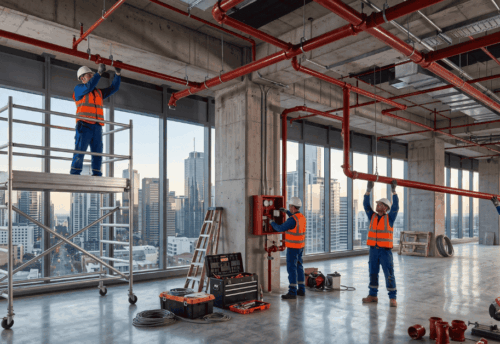
Contemporary fire fighting systems in structures have a number of interconnected parts that are meant to cooperate in case of an emergency.
Fire Hydrant Systems
Fire hydrants offer a supply of reliable water to the firefighters. They are attached in every corner of the premises and even outside to assist fire fighting missions.
Fire Sprinkler Systems
Fire sprinklers are automatic fire systems, which come into action when the temperatures go beyond a given level. When activated they open up water to contain the fire.
Fire Extinguishers
The portable fire extinguishers enable the occupants to manage small fires faster before they escalate to bigger proportions. They are normally fitted in strategic sites around buildings.
Fire Hose Reels
Fire hose reels ensure continuous supply of water and are normally used by trained individuals in combating fire before the arrival of the emergency services.
Fire Pumps
Fire pumps keep water pressure in the firefighting systems so that hydrants and sprinklers become operational.
These parts combine to form a unified system, which improves the establishment of fire safety devices and emergency management.
Fire Alarm Systems Guide
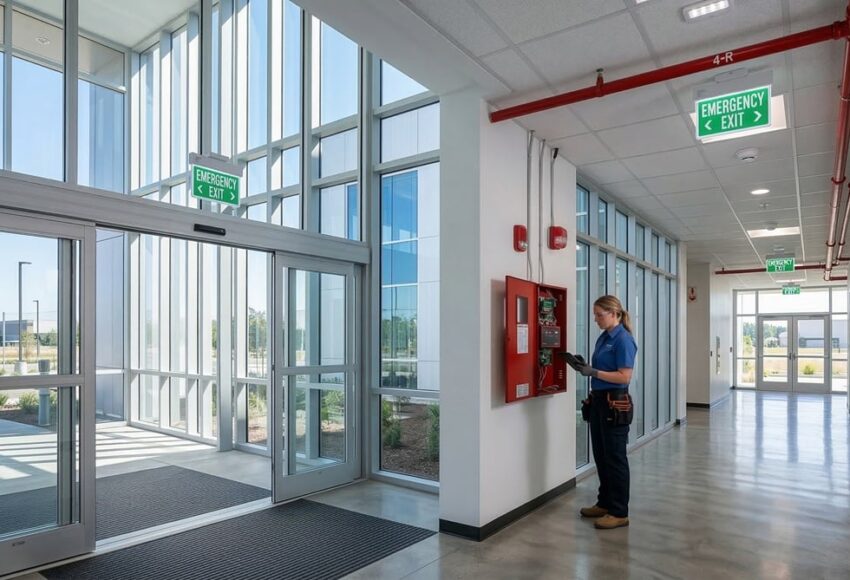
Fire safety systems in buildings should include fire alarm systems as among the most significant elements of the system. The major one is to monitor fire hazards and notify the occupants in real time.
An example of a fire alarm system comprises:
- Smoke detectors
- Heat detectors
- Manual call points
- Alarm sounders
- Fire alarm control panels
Upon the detection of smoke or heat, the system triggers alarms to alert the occupants and the emergency personnel.
The contemporary fire alarm systems are able to be integrated with other safety devices in the building such as the sprinkler system and emergency lighting. This integration enhances response time and assists in controlling fire hazards in a more efficient way.
Fire alarm systems are normally tailored to the international safety standards formulated by the National Fire Protection Association.
Lighting Systems in Building Emergencies.
The need to have emergency lighting systems is to prevent accidents during times of power outages or fire outbreaks.
Electrical systems can malfunction or smoke can be a hindrance when there is a fire. Building lights are fitted with emergency lights to make certain that corridors, staircases, and exits are lit up.
Typical emergency lighting places are:
- Exit routes
- Staircases
- Hallways and corridors
- Fire exits
The majority of emergency lighting systems have back-up batteries/generators in order to remain operational in case there is a problem with the main power supply.
The correct location and frequent testing will make sure that emergency lighting systems help in safe evacuation in the case of an emergency.
Maintenance of Fire Safety system
Maintenance should also be done frequently so that fire safety systems in buildings can work properly during an emergency.
Even the developed systems can fail at the time when it is needed the most without proper inspection and testing.
Fire Safety Maintenance Checklist
- The regular maintenance should entail:
- Checking sprinkler heads to see whether they are damaged or blocked.
- Checking of fire pumps and water pressure levels.
- Testing fire hydrants and hose reels.
- Examining fire extinguishers.
- Testing fire alarm systems
- Checking the functionality of emergency lights.
Periodic checks allow detecting issues at an initial stage and adherence to fire safety norms.
Preventive maintenance also increases the life of equipment and enhances the safety of the building.
Significance of Fire Protection Systems Construction
Good building fire suppression systems have a number of significant advantages:
Early Fire Detection
Fire alarms detect the hazards early and give advance warnings.
Improved Evacuation Safety
Occupants find a safe way out using emergency lighting systems.
Reduced Property Damage
Fires are held back by suppression systems like sprinklers.
Regulatory Compliance
Many building codes require fire safety systems to comply with established safety standards. The installation of these systems through professional Gulf Gas installation services helps building owners create a safer environment for employees, residents, and visitors.
Conclusion
Building fire safety systems are important to save lives and property in the event of an emergency. Firefighting systems, fire alarms and emergency lighting systems are interconnected in a manner that they are aimed at detecting the hazards, controlling the fire and directing the occupants towards safety.
These systems are installed and properly maintained by making sure they are free of malfunctioning and are kept in good condition when they are most required.
Organizations are able to minimize fire-related hazards by investing in building fire protection systems that are reliable and enhance the overall safety of building occupants.
Building fire safety systems are combined safety measures that are aimed at identifying, managing, and suppression of fires in cases of emergencies. Such systems are usually installed with fire alarms, smoke detectors, sprinkler systems, fire extinguishers and emergency lights. They are all designed to assist in fire occupant alerts, assist in evacuation, and minimize fire damage.
Fire alarm systems are also necessary since they give an early warning of fire hazards and detection. In case of smoke or heat emission, the system will trigger alarms that will notify people to leave the building promptly. Early identification will help in the minimization of the likelihood of injury, loss of life and damages on property.
Emergency lighting systems are used as a source of light in case of a failure in the main power supply during the course of a fire or some other emergency. These constitute lights that are used to direct occupants on the ways out, steps, and emergency exits by making sure that people can evacuate safely even where the visibility is low.
Fire safety systems are to be regularly checked and kept in a good condition to be sure of their proper functioning. Monthly tests, quarterly tests and annual tests are some of the routine checkups that can be conducted during inspections based on the local regulations and system requirements. Maintenance aids in the detection of faults in good time and the effectiveness of systems in case of a disaster.
The firefighting systems normally have many significant elements like fire hydrants, sprinkler systems, fire extinguishers, fire hose reels, fire pumps, fire alarm systems, and emergency lights. These elements collaborate to identify fire, manage fire, and facilitate safe evacuation.