
Medical Gas Pipeline Services (MGPS) in Healthcare Infrastructure
Safe, continual, and dependable gas supply infrastructure is very vital in modern healthcare systems. Medical gas pipeline services are one of the most important elements in hospitals today that provide a continuous supply of life-saving gases to the areas of patient care. They are used to remove the hazards of operating a manual cylinder and offer centralized control over such vital medical gases as oxygen, nitrous oxide, medical air, and vacuum systems.
Even a slight failure in gas supply can have severe consequences in a highly developed healthcare setting, particularly in the ICUs or operation theaters. This is the reason why hospitals are moving towards centralized pipeline systems rather than the traditional cylinder-based systems. The necessity to meet the high-performance medical facilities and the strict healthcare regulations have increased the demand on safe and efficient MGPS infrastructure all over the UAE.
What is Medical Gas Pipeline Service (MGPS)?
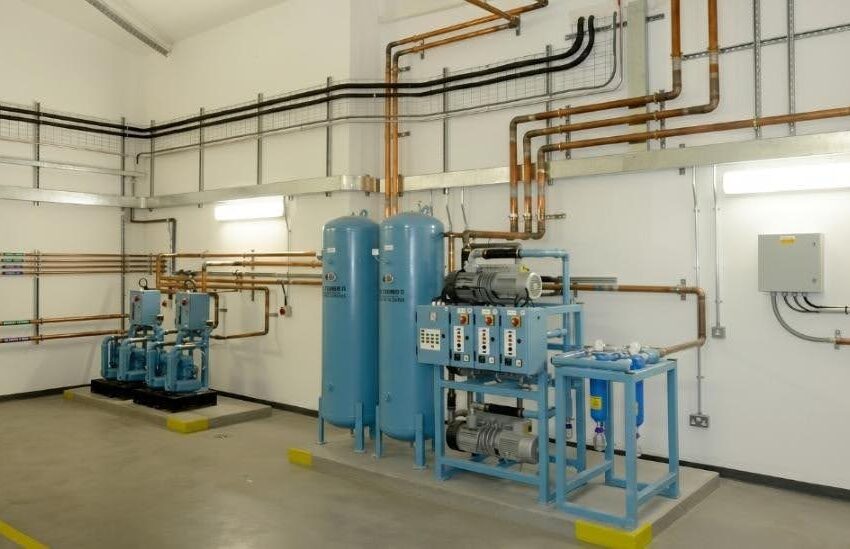
A Medical Gas Pipeline service (MGPS) is a dedicated network that is used to supply medical gases to different locations within a hospital, which are centralized in one location. These gases are piped with copper pipes that run all over the facility, directly to patient beds, theaters, and the emergency rooms.
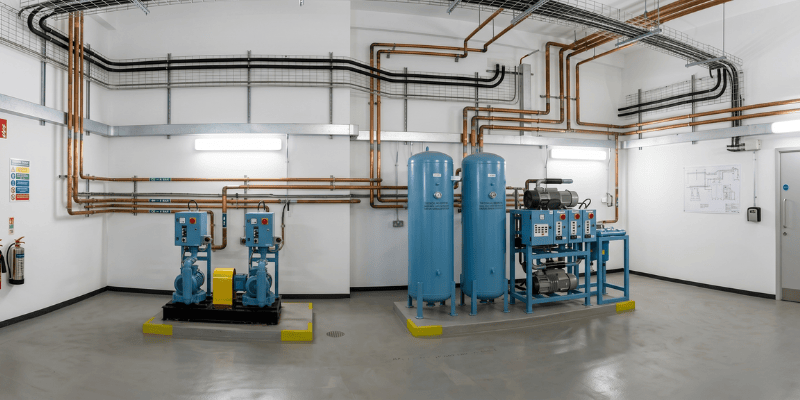
The system is designed in a manner that ensures that the gases are at a constant pressure, purity, and flow. It consists of a central gas plant, control panels, alarms, valves, and terminal units that guarantee safe and efficient performance. Unlike portable cylinders, MGPS eliminates dependency on manual replacement, making it a more reliable solution for critical healthcare environments.
These increased uptakes of medical gas pipeline services are indicative of the ways hospitals are putting patient safety, efficiency of operations, and advanced healthcare infrastructure first.
How MGPS operates in Hospitals?
The principle of operation of MGPS is centralized gas distribution. Medical gases are stored in bulk tanks, or they are produced locally with special equipment. The gases are sent to various departments in the hospitals through a system of pipelines that radiate out of the central source.
Pressure regulators maintain the flow of gas to be stable and safe to use in medical applications. The performance is monitored by continuously watching it, and any leaks or pressure drops are immediately detected by the monitoring systems. In the event of an emergency, alarm systems can warn medical personnel about it and make sure that they respond quickly enough to avert possible dangers.
It is this highly organized and computerized system that makes medical gas pipeline services a must-have in any modern hospital that seeks efficiency and reliability.
Medical Gases used in MGPS
Oxygen – The Breathing Gas
The medical gas most commonly used in healthcare facilities is oxygen. It helps patients who have respiratory problems, contributes to surgeries, and is imperative in emergency care. Oxygen administration assists in the maintenance of normal blood oxygen levels, which is essential to allow the effective functioning of the body organs.
Nitrous Oxide – Anesthetic Support
Nitrous oxide is an anesthetic gas that is usually employed in surgery and dentistry. It offers analgesia and anesthesia, which makes medical procedures more comfortable and regulated to the patients.
Medical Vacuum – Suction System
Surgeries involve the use of medical vacuum systems to evacuate fluids, blood and secretions. This will provide a clean field in the operation room and serve to maintain hygiene and safety in the operation room.
Medical Air-Controlled Respiratory Support
Compressed air that is used in respiratory therapy and medical equipment is purified and used as medical air. It is warranted in a situation where the oxygen levels of patients need to be controlled.
Relevance of MGPS in ICU and Operation Theaters
Critical Role in ICU
Continuous gas supply systems are very important in intensive care units. ICU patients are usually in need of oxygen 24/7, and lack of it may be fatal. MGPS provides continuous provision of oxygen and hence is a life support system.
Surgical Accuracy
Medical gases need to be meticulously regulated in operation theaters during anesthesia and surgical procedures. MGPS enables anesthetists and surgeons to control the flow of gas precisely and keep the patient safe and provide smooth operations.
Such controlled environments would be very challenging to maintain without the services of a reliable medical gas pipeline.
MGPS vs Cylinder-Based Systems
Feature | MGPS System | Cylinder System |
Supply | Continuous pipeline supply | Manual replacement required |
Safety | High safety with monitoring systems | Risk of leakage and handling errors |
Efficiency | Automated and centralized | Labor-intensive |
Cost | Cost-effective long term | Higher operational cost |
Reliability | Highly reliable | Dependent on availability |
The comparison distinctly explains why hospitals are swiftly moving towards MGPS. There may still be cylinder systems in smaller systems, but centralized pipelines are the preference of large hospitals because of safety and efficiency.
Advantages of Central Medical Gas Pipeline Systems
Centralized MGPS offers several important benefits that improve hospital operations and patient care. One of the biggest advantages is uninterrupted gas supply, which ensures that critical patients always receive oxygen and other necessary gases without delay.
Another key benefit is reduced manual handling. Healthcare staff no longer need to transport heavy cylinders across departments, which reduces workplace injuries and operational delays. Additionally, MGPS improves hospital cleanliness and organization by eliminating cylinder storage areas.
Cost efficiency is another major advantage. While installation requires investment, long-term maintenance costs are significantly lower compared to cylinder-based systems. This makes Medical Gas pipeline services a smart choice for modern healthcare facilities.
Oxygen Pipeline Installation Services in UAE
The UAE has become a leading hub for advanced healthcare infrastructure, and demand for oxygen pipeline systems is rapidly increasing. Hospitals, clinics, and healthcare centers require professionally designed MGPS installations that meet international standards.
Installation Process Overview
The installation of medical gas pipelines involves careful planning and engineering design. It starts with system layout, followed by pipeline installation, valve integration, outlet placement, and final testing. Each step is carried out under strict safety protocols to ensure system reliability.
Safety and Compliance Standards
Healthcare facilities in the UAE must comply with international standards such as NFPA and HTM guidelines. These regulations ensure that all MGPS installations are safe, efficient, and suitable for critical medical environments.
Professional Medical Gas pipeline services providers ensure full compliance with these standards during installation and maintenance.
Why Choose Gulf Gas for Medical Gas Pipeline Services
When it comes to reliable and advanced Medical Gas pipeline services, Gulf Gas is a trusted name in the healthcare engineering industry. The company specializes in designing, installing, and maintaining complete MGPS solutions tailored for hospitals, clinics, and healthcare centers across the UAE.
Gulf Gas focuses on delivering safe, efficient, and fully compliant systems that meet international healthcare standards. Their expertise covers everything from oxygen pipeline installation to full-scale medical gas infrastructure projects. With a strong technical team and advanced engineering capabilities, they ensure uninterrupted gas supply systems that enhance patient safety and hospital efficiency.
Components of Medical Gas Pipeline System
Pipelines, Valves, and Outlets
MGPS relies on high-quality copper pipelines that transport gases safely throughout the hospital. Valves control the flow, while outlets provide access points for medical staff at patient bedsides.
Control and Monitoring Systems
Control panels and monitoring systems are essential for maintaining system stability. They continuously track gas pressure and trigger alarms in case of abnormalities, ensuring safety at all times.
Maintenance and Challenges in MGPS
Like any advanced system, MGPS requires regular maintenance to ensure smooth operation. Common issues include gas leaks, pressure imbalance, and wear of system components.
Preventive maintenance programs are essential to detect problems early and avoid system failure. Regular inspections and testing ensure that Medical Gas pipeline services remain reliable and safe for continuous hospital use.
Future of Medical Gas Pipeline Systems
The future of MGPS is moving toward automation and smart healthcare integration. Hospitals are increasingly adopting IoT-based monitoring systems that provide real-time data on gas usage, pressure levels, and system performance.
These advanced technologies help improve efficiency, reduce downtime, and enhance patient safety. As healthcare systems evolve, MGPS will continue to play a critical role in hospital infrastructure development.
Conclusion
Medical Gas Pipeline Systems have become an essential part of modern healthcare infrastructure. They ensure safe, continuous, and efficient delivery of life-saving gases to patients in critical care environments. Compared to traditional cylinder systems, MGPS offers superior safety, reliability, and cost efficiency.
With growing demand for advanced healthcare facilities, Medical Gas pipeline services are becoming increasingly important for hospitals across the UAE and beyond. Investing in a well-designed MGPS system ensures better patient care, improved operational efficiency, and long-term safety.